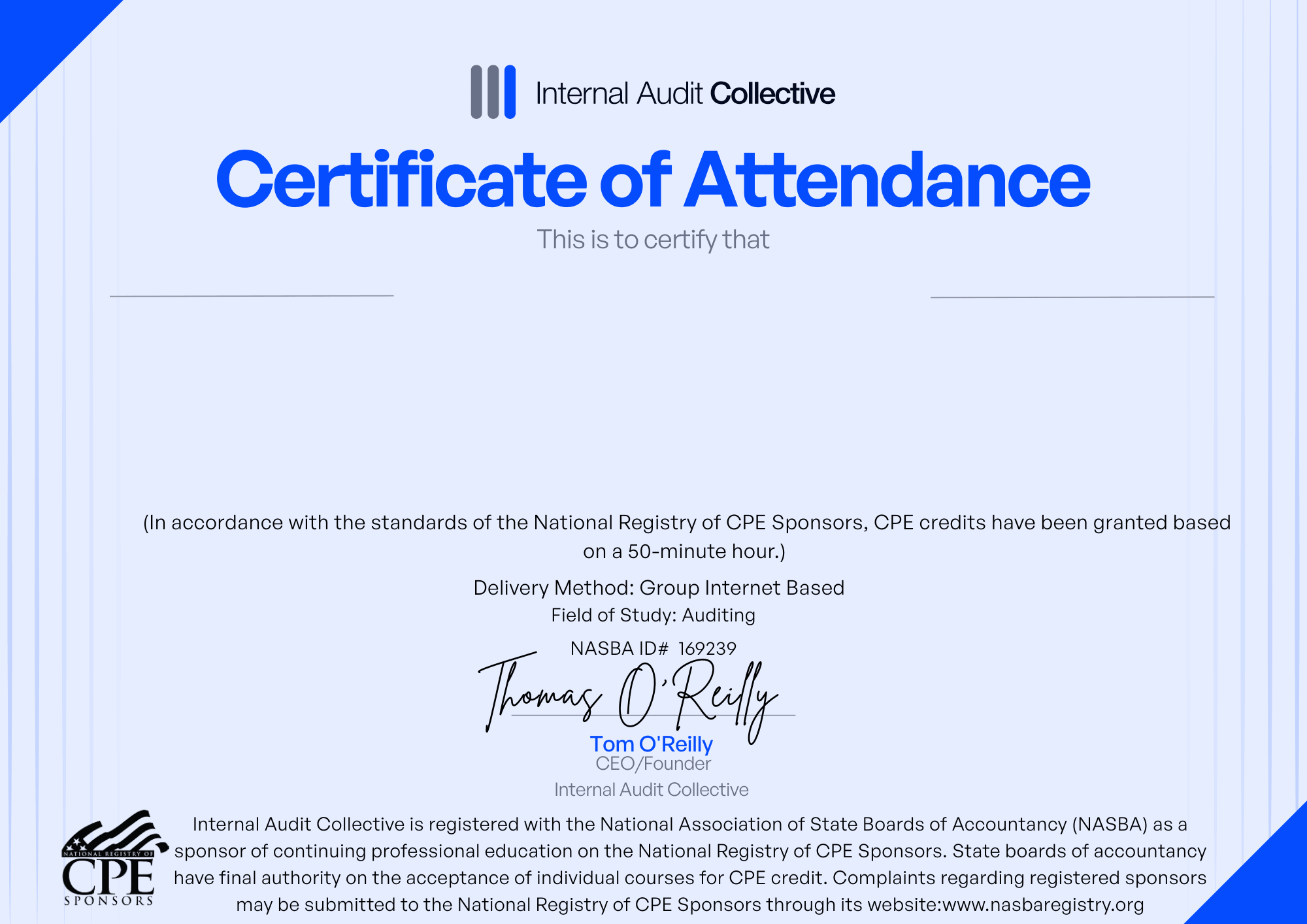
GKN
Issued to
Gideon K Njoga
Want to report a typo or a mistake?
Credential Verification
Issue date: June 11, 2026
ID: 4798492f-41d7-4b77-8689-492f072768b3

Type
Webinar
Level
Introductory
Format
Online
Duration
60 minutes
Price
Free
Description
“If only we had more budget, our team could use data analytics more.”
Many internal audit teams face real constraints around staffing, technology budgets, and technical skills. But those constraints do not have to prevent teams from building practical analytics capabilities and providing more coverage, efficiencies, and insights.
This webinar will explore cost-effective ways to build and scale audit analytics using tools many organizations already own or can access at little to no cost. Topics will include spreadsheet-based analytics, no-code and low-code tools, open-source solutions, generative AI, and enterprise business applications that can support audit analytics activities.
The session is designed for internal audit, SOX, risk, and control professionals in the early to mid-stages of analytics maturity who are looking for practical ways to enhance audit testing, continuous monitoring, and risk analysis without significant technology investment.
Learning Objectives
Upon completion of this program, participants will be able to:
Identify low-cost and no-cost technology options for audit analytics, including spreadsheets, office productivity tools, open-source platforms, low-code solutions, and generative AI tools.
Evaluate practical use cases where existing organizational tools can support audit testing, continuous monitoring, risk analysis, and control evaluation.
Apply foundational strategies for developing audit analytics capabilities in teams with limited technical resources or low analytics maturity.
Recognize key risks, governance considerations, and control implications associated with using open-source and AI-enabled tools in audit activities.
Describe practical steps for implementing and sustaining data analytics within individual audit projects and broader internal audit activities.